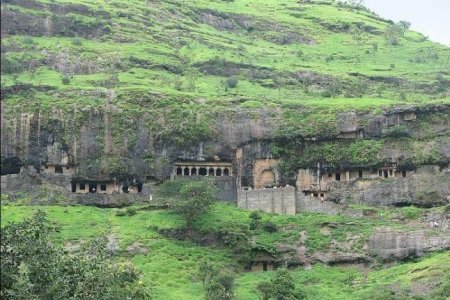
Pandav Leni, Nashik, also known as the Pandavleni Caves or Trirashmi Caves, is one of the most important ancient heritage sites in Maharashtra. Located on Trirashmi Hill, around 8 km from Nashik city, the caves offer a fascinating combination of ancient Buddhist heritage, rock-cut architecture, history, and panoramic views.
The caves were created more than 2,000 years ago and were used by Buddhist monks as places for meditation, residence, learning, and religious activities.
Despite the popular name “Pandav Leni,” the caves are not historically associated with the Pandavas of the Mahabharata. The name is generally linked to local tradition and folklore.
Today, Pandav Leni is an important destination for tourists, history enthusiasts, archaeology lovers, photographers, and visitors looking to experience Nashik beyond its famous temples and vineyards.
The history of Pandav Leni goes back to the early centuries BCE and CE.
The caves were excavated into the basalt rock of Trirashmi Hill and were primarily associated with Buddhist monks. They served different purposes, including monasteries known as Viharas, prayer halls known as Chaityas, meditation spaces, and residential areas.
The development of the caves was supported by various rulers, merchants, officials, and devotees, whose contributions helped establish the site as an important Buddhist center.
The inscriptions found at the site provide valuable information about ancient society, religious life, donations, and the people connected with the caves.
One of the most common questions visitors ask is:
“Are Pandav Leni Caves connected to the Pandavas?”
Historically, there is no established evidence that the Pandavas of the Mahabharata built or lived in these caves.
The name Pandav Leni became popular through local folklore and traditional storytelling. Archaeological evidence instead identifies the caves as an important ancient Buddhist rock-cut complex.
The alternative name Trirashmi Caves is connected with the Trirashmi Hill on which the caves are located.
Pandav Leni is an important archaeological site because it provides insight into the development and spread of Buddhism in ancient western India.
The caves contain:
Ancient inscriptions
Buddhist sculptures
Rock-cut monasteries
Prayer halls
Meditation spaces
Stone benches
Water cisterns and reservoirs
Decorative architectural elements
The inscriptions, particularly those written in ancient scripts such as Brahmi, are valuable sources for understanding the history of the region.
The site demonstrates how religious communities, traders, and patrons contributed to the development of Buddhist centers along important ancient routes.
Pandav Leni consists of a large group of rock-cut caves carved directly into the basalt hill.
The complex is known for its impressive craftsmanship and variety of architectural features. Depending on the cave, visitors can see:
Carved pillars
Prayer halls
Monastic chambers
Meditation spaces
Stone benches
Sculptures
Inscriptions
Water reservoirs
Instead of constructing buildings from separate stones, ancient artisans carved the spaces directly into the natural rock of the hill.
This makes Pandav Leni an excellent place to understand the rock-cut architectural traditions of ancient India.
Visiting Pandav Leni involves climbing a series of stone steps leading from the lower area towards the caves.
The climb is manageable for many visitors but can still require some effort, particularly during hot weather.
As you climb higher, the surrounding landscape opens up, and visitors can enjoy panoramic views of Nashik and the surrounding area.
For photographers and nature lovers, the combination of ancient stone architecture and the hill landscape makes the journey especially rewarding.
One of the highlights of visiting Pandav Leni is the view from the hill.
From higher points around the caves, visitors can look across parts of Nashik city and the surrounding landscape.
The scenery changes considerably with the season. During the monsoon, the surrounding hills become greener, while the winter months generally provide more comfortable conditions for climbing and sightseeing.
Pandav Leni is located on Trirashmi Hill, approximately 8 km southwest of Nashik city, Maharashtra.
The site is accessible by road, followed by a climb up the hill towards the caves.
Its location makes Pandav Leni easy to include in a wider Nashik sightseeing itinerary.
Pandav Leni can be visited during different seasons, but the experience varies throughout the year.
This period is generally considered comfortable for climbing the steps and exploring the caves because the weather is comparatively pleasant.
The monsoon brings greenery to the surrounding hills and can create beautiful scenery around Trirashmi Hill.
However, visitors should be cautious because stone steps and surfaces can become wet and slippery during rainfall.
Summer afternoons can be hot, making the climb more tiring. If visiting during hotter months, an early morning visit is generally more comfortable.
Nashik Airport (Ozar) is the nearest airport serving Nashik. From the airport, visitors can continue towards Pandav Leni by taxi or other available local transportation.
Nashik Road Railway Station is approximately 10 km from Pandav Leni. Visitors can use taxis, auto-rickshaws, buses, or private vehicles to reach the site.
Pandav Leni is well connected to Nashik city by road. Visitors can travel by:
City buses
Auto-rickshaws
Taxis
Private vehicles
Once you reach the site, the caves are accessed by climbing the stone steps leading up Trirashmi Hill.
Pandav Leni can easily be combined with other Nashik attractions.
Muktidham is a prominent temple complex near Nashik Road, known for its religious importance and distinctive architecture.
Someshwar Waterfall is a popular natural attraction near the Godavari River and is particularly scenic during and after the monsoon.
Sula Vineyards is one of Nashik's well-known attractions and is popular among visitors interested in vineyards, wine tourism, and the region's agricultural landscape.
Located near Trimbakeshwar, this ancient Shiva temple is one of the important pilgrimage destinations associated with Nashik.
Ramkund is a sacred pilgrimage site on the Godavari River in Panchavati and can be included in a religious sightseeing itinerary.
Kalaram Temple is a historic Lord Rama temple in Panchavati, known for its black stone idol and traditional architecture.
Pandav Leni is famous for its ancient Buddhist rock-cut caves, inscriptions, sculptures, architecture, and panoramic views of Nashik.
No established archaeological evidence connects the caves with the Pandavas of the Mahabharata. The name is associated mainly with local folklore, while the caves are historically identified as an ancient Buddhist site.
The caves date back more than 2,000 years, with excavation and development taking place over several centuries in the ancient period.
The complex is commonly described as having 24 rock-cut caves.
Pandav Leni is primarily associated with Buddhist heritage and was used by Buddhist monks for residence, meditation, learning, and religious activities.
Pandav Leni is located on Trirashmi Hill, approximately 8 km southwest of Nashik city, Maharashtra.
Children can visit Pandav Leni, but the site involves climbing steps and walking on uneven surfaces. Adult supervision is recommended.
October to March is generally comfortable for climbing and sightseeing. The monsoon season can offer lush green surroundings but requires extra caution because surfaces may become slippery.
The time required depends on your pace and interest in history, photography, and sightseeing. Allow sufficient time for the climb, cave exploration, and views rather than rushing through the site.
Nearby and commonly visited attractions include Muktidham Temple, Someshwar Waterfall, Sula Vineyards, Trimbakeshwar Temple, Ramkund, and Kalaram Temple.
Pandav Leni offers a different side of Nashik.
While the city is widely known for its temples, pilgrimage sites, vineyards, and the Godavari River, Pandav Leni takes visitors back more than two thousand years into the region's Buddhist and archaeological history.
The combination of ancient rock-cut caves, inscriptions, sculptures, hill scenery, and panoramic city views makes it a worthwhile destination for:
History enthusiasts
Archaeology lovers
Students
Photographers
Nature lovers
Families
Heritage tourists
Travellers exploring Nashik
Pandav Leni, Nashik, also known as the Trirashmi Caves, is an extraordinary heritage destination that showcases the skill and cultural traditions of ancient India.
Its Buddhist history, rock-cut architecture, inscriptions, sculptures, and hilltop views make it much more than a typical sightseeing attraction.
Whether you are visiting Nashik for history, heritage, nature, photography, or a wider city tour, Pandav Leni deserves a place on your Nashik travel itinerary.
Practical Local Tips for Visitors A little preparation can make your Pandav Leni visit much more comfortable. 1. Start Early An early morning visit is a good option, especially if you want to avoid the strongest daytime heat and explore the caves comfortably. 2. Wear Comfortable Footwear You will need to climb stone steps to reach the caves. Wear comfortable shoes or footwear suitable for walking and climbing. 3. Carry Drinking Water The climb can be tiring, particularly in warmer weather. Carry sufficient drinking water and stay hydrated. 4. Be Extra Careful During Monsoon The monsoon makes the surrounding landscape beautiful, but wet stone steps can become slippery. Walk slowly and avoid taking unnecessary risks while climbing. 5. Allow Enough Time Do not treat Pandav Leni as a quick photo stop. Give yourself enough time to explore the caves, inscriptions, architectural details, and viewpoints. 6. Protect the Ancient Structures Pandav Leni is an important archaeological heritage site. Avoid touching, scratching, writing on, or damaging the ancient rock surfaces, sculptures, and inscriptions. 7. Carry Sun Protection During warmer months, carry a cap, sunglasses, and sunscreen, particularly if you plan to spend extended time exploring the hill. 8. Be Careful While Taking Photographs The hill offers excellent viewpoints, but avoid standing too close to edges or climbing restricted areas simply for photographs. 9. Visit With Children Carefully Children may enjoy the caves and hill experience, but parents should supervise them closely around steps, uneven surfaces, and elevated areas. 10. Combine Pandav Leni With Other Nashik Attractions If you are planning a full-day Nashik sightseeing itinerary, you can combine Pandav Leni with other attractions based on your route and available time. 11. Check Current Visitor Information Entry rules, timings, access arrangements, and other visitor facilities can change. Check the latest official information before travelling, particularly during holidays and peak tourist periods.
Budget Rooms in Nashik | Guest Houses in Nashik | Hotels in Nashik | Lodges in Nashik | Tent Bookings in Nashik
Astrologers in Nashik | Autos/Taxis in Nashik | Bus Services in Nashik | Car Rentals in Nashik | Hospitals in Nashik | Pandits in Nashik | Puja Bookings in Nashik | Tour & Travels in Nashik
Shree Sant Nivruttinath Maharaj Samadhi Mandir, Trimbakeshwar, Nashik | Shri Swaminarayan Mandir, Nashik | Kevdiban Mhasoba Maharaj Temple, Nashik | Tringalwadi Fort, Igatpuri, Nashik | Ghatandevi Temple, Igatpuri, Nashik | Dhamma Giri Vipassana Centre, Igatpuri, Nashik | Vaitarna Dam, Igatpuri, Nashik | Kushavarta Kund, Trimbakeshwar, Nashik | Renuka Mata Mandir, Chandwad, Nashik | Ganga Godavari Temple, Nashik | Kalsubai Trek, Nashik | Ramshej Fort, Nashik | नाशिक के आकर्षण में सभी देखें