List Business
HomeAbout KumbhWhat is Kumbh Mela?

What is Kumbh Mela?

The largest peaceful gathering on Earth — a confluence of faith, fire, and the sacred rivers of Bharat.

The Meaning of Kumbh

The Sanskrit word Kumbh means "pot" — specifically the celestial pot of Amrit, the nectar of immortality. Mela means "gathering" or "fair." Together, Kumbh Mela is the gathering held wherever the divine nectar once touched the earth.

It is not a single event but a living cycle of pilgrimages — a moving river of saffron-robed sadhus, householder devotees, scholars, performers and seekers from every corner of India and the world.

The Four Types of Kumbh

  • Maha Kumbh Mela — Once every 144 years at Prayagraj. The greatest of all.
  • Purna Kumbh Mela — Every 12 years, rotating between Prayagraj, Haridwar, Ujjain and Nashik.
  • Ardh Kumbh Mela — The "half Kumbh", held every 6 years at Prayagraj and Haridwar.
  • Magh Mela — Annual gatherings at each of the four sites.

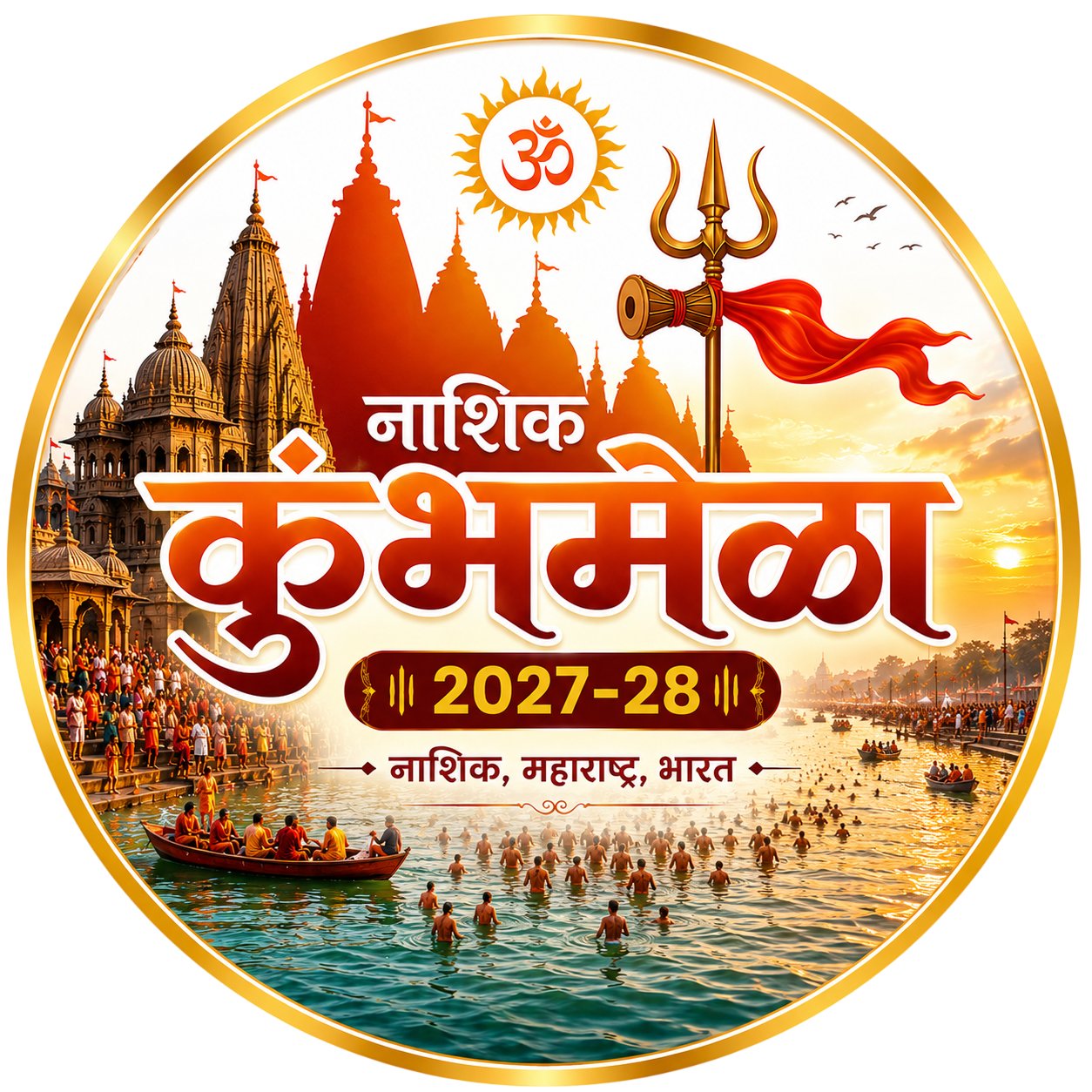
Nashik's Sinhastha Kumbh 2027 is a Purna Kumbh — the once-in-twelve-years gathering on the banks of the Godavari.

The Astronomical Cycle

The exact dates of each Kumbh are determined by the alignment of Jupiter, the Sun and the Moon in specific zodiac signs. At Nashik, the Kumbh begins when Jupiter enters Leo (Sinha rashi) — hence the name Sinhastha. This alignment opens a "window" believed to be the most spiritually charged moment in the twelve-year cycle.

What Happens at the Kumbh

  • Shahi Snan — The royal bath days when the Akhadas process to the river first.
  • Pravachan — Spiritual discourses by saints from every tradition.
  • Bhandara — Free community meals served around the clock.
  • Akhada Camps — Tented cities of the thirteen monastic orders open to all.
  • Cultural Festivals — Classical music, dance, Vedic recitation and folk performance.

Why Pilgrims Come

It is believed that a single dip in the sacred river during a Shahi Snan washes away the karmic burden of countless lifetimes and grants moksha — liberation from the cycle of birth and death. Beyond the spiritual, the Kumbh is a chance to behold the living tapestry of Sanatana Dharma in its fullest, most ancient form.
References & Further Reading

  • Ministry of Culture, Govt. of India — Kumbh Mela cultural dossier. indiaculture.gov.in
  • UNESCO — Kumbh Mela, Intangible Cultural Heritage of Humanity. ich.unesco.org/en/RL/kumbh-mela-01258
  • Eck, Diana L. India: A Sacred Geography. Harmony Books, 2012.
  • Nashik Municipal Corporation — Sinhastha planning documents. nashikcorporation.in
  • Harvard South Asia Institute — Kumbh Mela mapping project (2013).
What is Amrit Snan? → Explore the Akhadas →