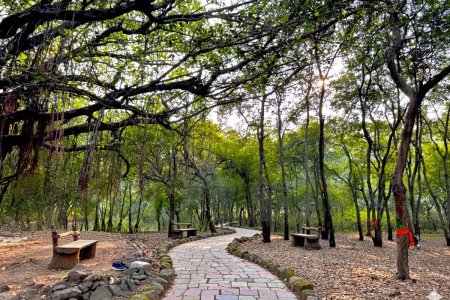
Located near Panchavati in Nashik, along the banks of the Godavari River, Tapovan is one of the city's most important spiritual and mythological destinations. Situated approximately 1.5 km from Panchavati, this peaceful area is known for its association with the Ramayana, Lord Rama, Goddess Sita, and Lord Lakshmana.
The name Tapovan comes from the Sanskrit words Tapas, meaning meditation or penance, and Vana, meaning forest. Together, Tapovan means the “Forest of Meditation.”
With its temples, sacred places, ashrams, greenery, and connection with ancient Hindu traditions, Tapovan offers visitors an opportunity to experience the spiritual heritage of Nashik.
Tapovan is traditionally associated with the ancient Dandakaranya Forest, where sages are believed to have performed meditation and penance.
According to Hindu mythology and the Ramayana, Lord Rama, Goddess Sita, and Lord Lakshmana spent part of their 14-year exile in the Nashik region.
Tapovan is particularly associated with the story of Shurpanakha, the sister of Ravana. According to the traditional account, Lakshmana cut off Shurpanakha's nose at this location.
The legend is also traditionally connected with the origin of the name Nashik, which is associated with the Sanskrit word Nasika, meaning “nose.”
Because of these mythological associations, Tapovan continues to hold special religious importance for Hindu devotees visiting Nashik.
Tapovan is surrounded by several temples, spiritual landmarks, and places associated with religious traditions.
The Ram Parnakuti Temple is associated with the Ramayana traditions of the Nashik region and attracts devotees interested in the connection between Lord Rama and Tapovan.
The Lakshmana Temple is another important spiritual landmark connected with the traditional Ramayana story associated with Tapovan.
Tapovan Kund is regarded as a sacred location and forms part of the area's religious landscape.
Kapila Sangam is another significant spiritual location in the wider Tapovan area and adds to the religious importance of the region.
Several ashrams and spiritual spaces can be found around Tapovan. These places contribute to the area's atmosphere of meditation, prayer, and spiritual learning.
The All Religion Temple reflects an inclusive spiritual atmosphere and is another place visitors can explore while visiting Tapovan.
The connection between Tapovan and the Ramayana is one of the main reasons devotees and tourists visit this part of Nashik.
According to traditional beliefs, the Nashik region was part of the forest landscape associated with Lord Rama's exile. Stories involving Rama, Sita, Lakshmana, and Shurpanakha are deeply connected with the area's religious identity.
For visitors interested in Indian mythology, Tapovan provides an opportunity to explore these traditions while visiting the temples and sacred locations associated with them.
Tapovan has an important role in the spiritual landscape of the Nashik Kumbh Mela, also known as Simhastha.
During the Kumbh Mela, Tapovan becomes a major spiritual gathering area where saints, sadhus, and pilgrims come together. The area can become especially vibrant during important religious activities and rituals.
For visitors attending the Nashik Kumbh Mela, Tapovan is therefore an important destination to include in a pilgrimage itinerary along with Panchavati, Ramkund, Kalaram Temple, Sita Gufa, and other religious places in Nashik.
The combination of the Godavari River, greenery, temples, ashrams, and peaceful surroundings gives Tapovan a distinctive spiritual atmosphere.
Visitors can spend time exploring the temples, sitting quietly near the sacred surroundings, participating in spiritual activities, or simply experiencing the atmosphere of one of Nashik's traditional pilgrimage areas.
For those interested in meditation, yoga, spirituality, mythology, and religious tourism, Tapovan offers a meaningful experience.
The best time to visit Tapovan for comfortable sightseeing is generally October to March, when the weather is more pleasant.
The monsoon season also adds to the beauty of the area as the surrounding landscape becomes greener.
Visitors planning their trip during the Nashik Kumbh Mela should expect significantly higher visitor numbers and a much more vibrant spiritual atmosphere.
If you are visiting during a major religious event, it is advisable to plan transportation and sightseeing in advance.
Tapovan is approximately 3 km from Nashik CBS Bus Stand and is easily accessible from different parts of Nashik.
Visitors can reach Tapovan by:
City buses
Auto-rickshaws
Taxis
Private vehicles
Its proximity to Panchavati makes it convenient to combine Tapovan with other nearby religious attractions.
Nashik Road Railway Station is approximately 10 km from Tapovan.
From the railway station, visitors can use taxis, buses, auto-rickshaws, or private vehicles to reach the destination.
The nearest airport is Nashik Airport at Ozar, approximately 25 km from Tapovan.
Visitors arriving by air can use taxis or private transportation to reach Tapovan.
Tapovan is located close to several important religious and historical attractions in Nashik.
Visitors can consider combining Tapovan with:
Panchavati
Ramkund
Kalaram Temple
Sita Gufa
Kapaleshwar Temple
Godavari River
Naroshankar Temple
Sundarnarayan Temple
This makes Tapovan an excellent starting point for a Nashik spiritual and heritage sightseeing route.
Tapovan is a sacred and historically significant area near Panchavati in Nashik, traditionally associated with meditation, the Ramayana, and the exile of Lord Rama, Goddess Sita, and Lord Lakshmana.
Tapovan is famous for its Ramayana connection, temples, spiritual atmosphere, Godavari River surroundings, and association with the Nashik Kumbh Mela.
The name Tapovan comes from the Sanskrit words Tapas, meaning meditation or penance, and Vana, meaning forest. It is therefore commonly interpreted as the “Forest of Meditation.”
Yes. According to Hindu mythology and local tradition, Tapovan is associated with the period when Lord Rama, Goddess Sita, and Lord Lakshmana were in the forest during their exile.
According to the traditional Ramayana account associated with the region, Lakshmana cut off Shurpanakha's nose at this location.
Yes. Tapovan is an important spiritual area during the Nashik Kumbh Mela (Simhastha) and attracts saints, sadhus, and pilgrims.
Tapovan is approximately 1.5 km from Panchavati, making it easy to include in a Panchavati sightseeing itinerary.
Tapovan is approximately 3 km from Nashik CBS Bus Stand.
October to March is generally comfortable for sightseeing. The monsoon season offers greener surroundings, while the Kumbh Mela period provides a major spiritual gathering experience.
Yes. Tapovan can easily be combined with Panchavati, Ramkund, Kalaram Temple, Sita Gufa, Kapaleshwar Temple, and other nearby religious attractions.
Tapovan offers a unique combination of mythology, spirituality, history, nature, and pilgrimage.
The connection with the Ramayana makes the destination especially meaningful for devotees and visitors interested in Indian mythology. At the same time, the Godavari River, greenery, temples, and spiritual centres create a peaceful environment for visitors.
For anyone planning a Nashik pilgrimage tour, Ramayana heritage tour, spiritual journey, or Kumbh Mela itinerary, Tapovan is an important destination to explore.
Tapovan, Nashik is more than a religious destination—it is a place where mythology, spirituality, nature, and the cultural heritage of Nashik come together.
Its traditional association with the Ramayana, sacred temples, spiritual centres, Godavari River surroundings, and important role during the Nashik Kumbh Mela make it one of the notable places to visit in Nashik.
Whether you are visiting Nashik for pilgrimage, exploring Ramayana-related destinations, or preparing for the Nashik Kumbh Mela, a visit to Tapovan can add a meaningful spiritual and cultural dimension to your journey.
Local Tips & Insider Advice for Visitors Visit early in the morning if you prefer a quieter and more peaceful atmosphere. Keep sufficient time to explore the temples and sacred places instead of treating Tapovan as a quick sightseeing stop. Dress respectfully while visiting temples, ashrams, and other spiritual places. During Kumbh Mela and major religious festivals, expect large crowds and plan transportation accordingly. Follow local instructions near the Godavari River and other sacred water bodies. Maintain cleanliness and avoid littering around temples, riverbanks, and public areas. If you are interested in meditation or spiritual activities, check the current schedule of ashrams or centres before visiting. During monsoon, check local weather and road conditions before travelling. Tapovan can easily be combined with Panchavati and other nearby religious attractions in a single sightseeing itinerary.
Budget Rooms in Nashik | Guest Houses in Nashik | Hotels in Nashik | Lodges in Nashik | Tent Bookings in Nashik
Astrologers in Nashik | Autos/Taxis in Nashik | Bus Services in Nashik | Car Rentals in Nashik | Hospitals in Nashik | Pandits in Nashik | Puja Bookings in Nashik | Tour & Travels in Nashik
Shree Sant Nivruttinath Maharaj Samadhi Mandir, Trimbakeshwar, Nashik | Shri Swaminarayan Mandir, Nashik | Kevdiban Mhasoba Maharaj Temple, Nashik | Tringalwadi Fort, Igatpuri, Nashik | Ghatandevi Temple, Igatpuri, Nashik | Dhamma Giri Vipassana Centre, Igatpuri, Nashik | Vaitarna Dam, Igatpuri, Nashik | Kushavarta Kund, Trimbakeshwar, Nashik | Renuka Mata Mandir, Chandwad, Nashik | Ganga Godavari Temple, Nashik | Kalsubai Trek, Nashik | Ramshej Fort, Nashik | View all in Attractions of Nashik