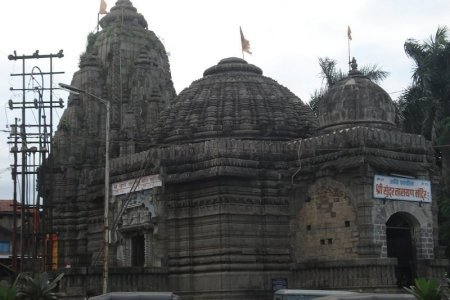
Sundarnarayan Mandir is one of the historic temples of Panchavati, Nashik, located near the Ahilyabai Holkar Bridge. Dedicated to Lord Vishnu, the temple is known for its spiritual significance, Maratha-era architecture, and fascinating astronomical design.
Built in 1756 during the Peshwa era, Sundarnarayan Mandir attracts devotees, history enthusiasts, architecture lovers, and tourists exploring the religious heritage of Nashik. Its location in the heart of Panchavati also makes it convenient to include in a wider Nashik pilgrimage and sightseeing itinerary.
Sundarnarayan Mandir was built in 1756 by Gangadhar Yashwant Chandrachud, a prominent noble associated with the Peshwa period.
The temple is connected with a Hindu mythological story involving Lord Vishnu, the demon Jalandhar, and his devoted wife Vrinda.
According to the traditional belief associated with the temple, Lord Vishnu regained his divine beauty after taking a holy bath in the Godavari River following Vrinda's curse. Because of this association with beauty and Lord Vishnu, he is worshipped here as "Sundar Narayan," meaning the Beautiful Lord Vishnu.
This religious tradition adds a unique spiritual dimension to the temple and its connection with the sacred Godavari River in Nashik.
The temple is an excellent example of Maratha-era temple architecture and reflects the artistic heritage of historic Nashik.
Visitors can observe architectural features such as:
Beautifully carved stone pillars
Intricate sculptures
Elegant arches
Detailed stone craftsmanship
A magnificent dome
Traditional temple design
Inside the sanctum, the principal deity is Lord Vishnu in the form of Sundar Narayan, accompanied by Goddess Lakshmi and Goddess Saraswati.
The craftsmanship and traditional design make Sundarnarayan Mandir an interesting destination not only for devotees but also for people interested in history and architecture.
One of the most fascinating features associated with Sundarnarayan Mandir is its astronomical architectural design.
Every year around 20 and 21 March, near the spring equinox, the first rays of the rising sun are traditionally observed to fall directly on the feet of Lord Vishnu's idol.
This alignment is regarded as an impressive example of how traditional temple architecture incorporated an understanding of the movement and position of the sun.
The phenomenon attracts devotees as well as history, architecture, and astronomy enthusiasts who are interested in experiencing this unique feature.
Visitors specifically planning to observe the sunlight alignment should verify the expected timing and local arrangements before their visit.
Sundarnarayan Mandir celebrates several important Hindu festivals with devotion and religious ceremonies.
Major festivals include:
Vaikuntha Ekadashi is an important occasion for devotees of Lord Vishnu and is observed with special prayers and religious activities.
Ram Navami is celebrated with devotion and attracts devotees to temples across Nashik.
The festival celebrating the birth of Lord Krishna is also observed with religious enthusiasm.
During Diwali, the temple and surrounding religious areas become part of the festive atmosphere of Nashik.
Hari-Hara Milan is a significant religious tradition associated with Nashik and is an important occasion for devotees.
During major festivals, the temple may be beautifully decorated and attract larger numbers of visitors.
The temple's location in Panchavati makes it particularly important for visitors exploring Nashik's religious heritage.
Panchavati is associated with several important temples, ghats, and places connected with Hindu traditions. Visitors can therefore combine a visit to Sundarnarayan Mandir with other nearby spiritual and historical attractions.
This makes the temple a useful stop for travelers planning a Panchavati sightseeing and pilgrimage route.
The period from October to March is generally considered comfortable for visiting Nashik because of the pleasant weather.
However, visitors interested specifically in the temple's unique sunlight phenomenon should plan their trip around 20 or 21 March, when the sun's rays are traditionally observed to align with the feet of the deity.
Festival periods can also attract larger crowds, so visitors should plan accordingly.
Sundarnarayan Mandir is located in Panchavati, approximately 2 km from Nashik CBS Bus Stand.
The temple can be reached conveniently by:
Local buses
Auto-rickshaws
Taxis
Private vehicles
Its central location makes it easy to include in a Panchavati sightseeing itinerary.
Nashik Road Railway Station is approximately 10 km from the temple.
Visitors can use taxis, auto-rickshaws, buses, or other local transportation services to reach Panchavati.
The nearest airport is Nashik Airport at Ozar, approximately 25 km from the temple.
From the airport, visitors can continue toward Panchavati by taxi or private vehicle.
Because Sundarnarayan Mandir is located in Panchavati, visitors can explore several important religious and cultural attractions in the surrounding area.
Depending on available time, a Panchavati itinerary can include:
Ramkund
Kalaram Temple
Sita Gufa
Kapaleshwar Temple
Godavari River Ghats
Other historic temples and religious sites in Panchavati
This makes Sundarnarayan Mandir a convenient destination to include in a Nashik spiritual and heritage tour.
Sundarnarayan Mandir is located in Panchavati, Nashik, near the Ahilyabai Holkar Bridge.
The temple was built in 1756 by Gangadhar Yashwant Chandrachud during the Peshwa era.
The main deity is Lord Vishnu, worshipped here as Sundar Narayan. Goddess Lakshmi and Goddess Saraswati are also associated with the main shrine.
The temple is known for its historic Peshwa-era architecture, religious significance, connection with the Godavari River, and unique sunlight alignment.
Around 20 and 21 March, near the spring equinox, the first rays of the rising sun are traditionally observed to fall directly on the feet of Lord Vishnu's idol.
Important festivals include Vaikuntha Ekadashi, Ram Navami, Janmashtami, Diwali, and Hari-Hara Milan (Vaikuntha Chaturdashi).
The temple is approximately 2 km from Nashik CBS Bus Stand.
Nashik Road Railway Station is approximately 10 km from the temple.
Yes. Its location makes it convenient to combine with important Panchavati attractions such as Ramkund, Kalaram Temple, Sita Gufa, and Kapaleshwar Temple.
Sundarnarayan Mandir offers a combination of spirituality, history, architecture, and traditional astronomical design.
For devotees, it is an important temple dedicated to Lord Vishnu. For history and architecture enthusiasts, the 18th-century temple provides an opportunity to appreciate Nashik's Maratha-era heritage. The unique sunlight alignment adds another fascinating reason to explore this historic place.
Its location in Panchavati also makes it an easy addition to a Nashik pilgrimage, temple tour, or heritage sightseeing itinerary.
Sundarnarayan Mandir, Nashik is a remarkable historic temple where religious tradition, architecture, and astronomical design come together.
Built during the Peshwa era and dedicated to Lord Vishnu as Sundar Narayan, the temple represents an important part of Nashik's spiritual and cultural heritage. Its proximity to other Panchavati attractions makes it an ideal destination for visitors exploring the historic heart of Nashik.
For anyone interested in Nashik temples, Panchavati heritage, Lord Vishnu temples, or unique temple architecture, Sundarnarayan Mandir is a meaningful place to include in their travel itinerary.
Local Tips & Insider Advice for Visitors Plan your visit along with other Panchavati attractions to make better use of your travel time. If you are visiting specifically for the sunlight phenomenon, check the latest local information about the timing before traveling. Festival days may be more crowded, so allow additional time for darshan and local travel. Dress respectfully when visiting the temple. Follow temple rules regarding photography, footwear, and visitor access. Panchavati has several attractions within the wider area, so comfortable footwear can be useful. During summer, plan outdoor sightseeing during cooler parts of the day. During monsoon, check local weather and road conditions before starting your journey.
Budget Rooms in Nashik | Guest Houses in Nashik | Hotels in Nashik | Lodges in Nashik | Tent Bookings in Nashik
Astrologers in Nashik | Autos/Taxis in Nashik | Bus Services in Nashik | Car Rentals in Nashik | Hospitals in Nashik | Pandits in Nashik | Puja Bookings in Nashik | Tour & Travels in Nashik
Shree Sant Nivruttinath Maharaj Samadhi Mandir, Trimbakeshwar, Nashik | Shri Swaminarayan Mandir, Nashik | Kevdiban Mhasoba Maharaj Temple, Nashik | Tringalwadi Fort, Igatpuri, Nashik | Ghatandevi Temple, Igatpuri, Nashik | Dhamma Giri Vipassana Centre, Igatpuri, Nashik | Vaitarna Dam, Igatpuri, Nashik | Kushavarta Kund, Trimbakeshwar, Nashik | Renuka Mata Mandir, Chandwad, Nashik | Ganga Godavari Temple, Nashik | Kalsubai Trek, Nashik | Ramshej Fort, Nashik | नाशिक के आकर्षण में सभी देखें